


Table of Contents


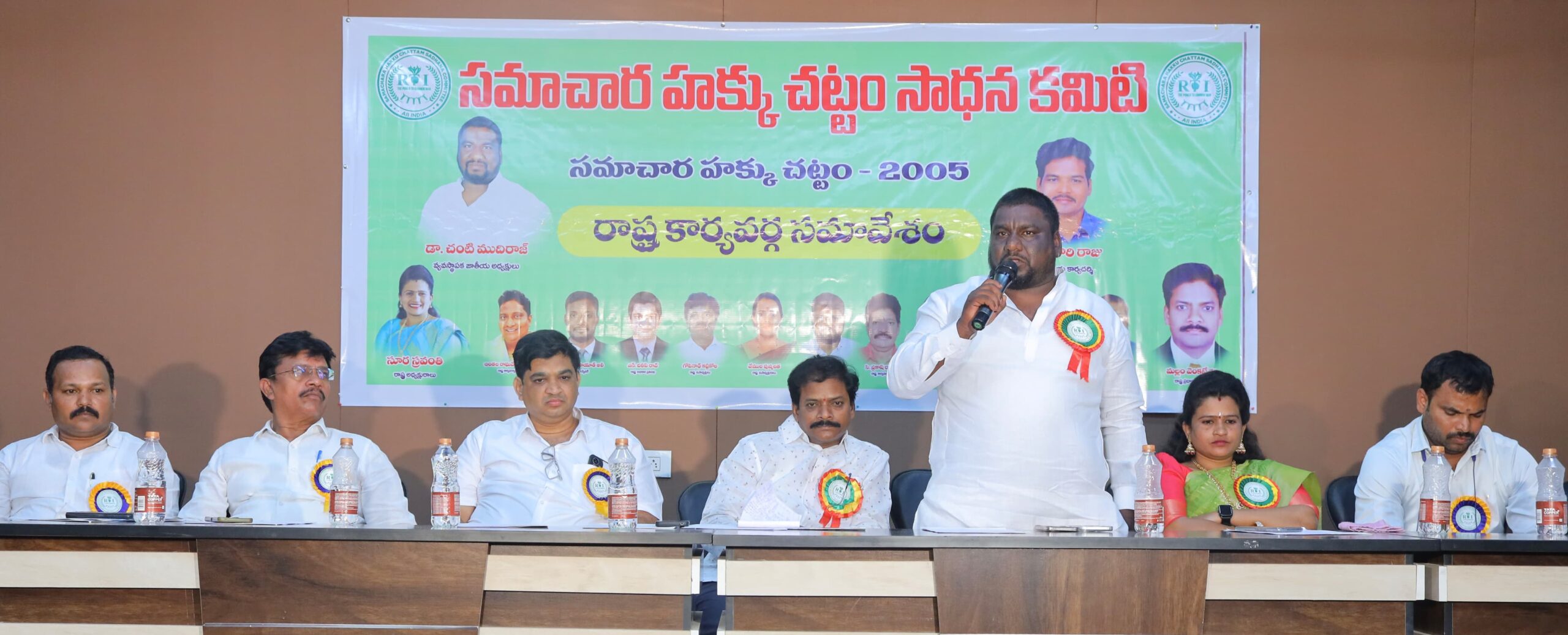
HYDERABAD: In the bustling heart of Indian democracy, a powerful tool lies largely untapped by its rightful owners—the citizens. The Right to Information (RTI) Act, 2005, hailed globally as a landmark legislation for transparency and accountability, completes two decades next year. Yet, a stark reality persists: a vast majority of Indians remain unaware of its existence, let alone its potential to transform their lives and hold power to account. Breaking this cycle of ignorance is the monumental mission undertaken by Dr. Chanti Mudiraj and his NGO, the Samachara Hakku Chattam Sadhana Committee, which is spearheading an extensive grassroots awareness campaign across Telangana and Andhra Pradesh.
Two Decades of RTI, Yet a Long Road to Travel
The RTI Act was envisioned as a catalyst for participatory democracy, empowering every citizen to seek information from public authorities, thereby curbing corruption and fostering good governance. However, the promise of the Act has been hampered by a critical gap—the lack of awareness at the grassroots level. For millions, navigating the bureaucracy to apply remains a daunting task. This is where Dr. Mudiraj and his dedicated team step in, transforming the complex language of the law into a weapon of the common man.
“It is a profound tragedy that after 20 years, the very people this law was designed to empower are still in the dark,” says Dr. Chanti Mudiraj, National President of the Samachara Hakku Chattam Sadhana Committee. “Information is not a privilege; it is a fundamental right. Our campaign is not just about teaching people how to file an RTI; it’s about awakening them to their right to question, to demand answers, and to actively shape the governance they deserve.”
A Year of Relentless Grassroots Mobilization
Over the past year, the NGO has undertaken a Herculean effort to bridge this awareness chasm. The numbers speak volumes about the scale of their commitment:

1,500+ RTI Activists Trained: Creating a robust network of informed individuals who can guide others in their communities.
100+ Workshops and Awareness Camps: Conducted in district headquarters, mandals, and even remote villages, demystifying the RTI process.
Countless Activities: From street plays (nukkad nataks) illustrating the power of RTI to public meetings and distribution of simplified pamphlets in local languages.
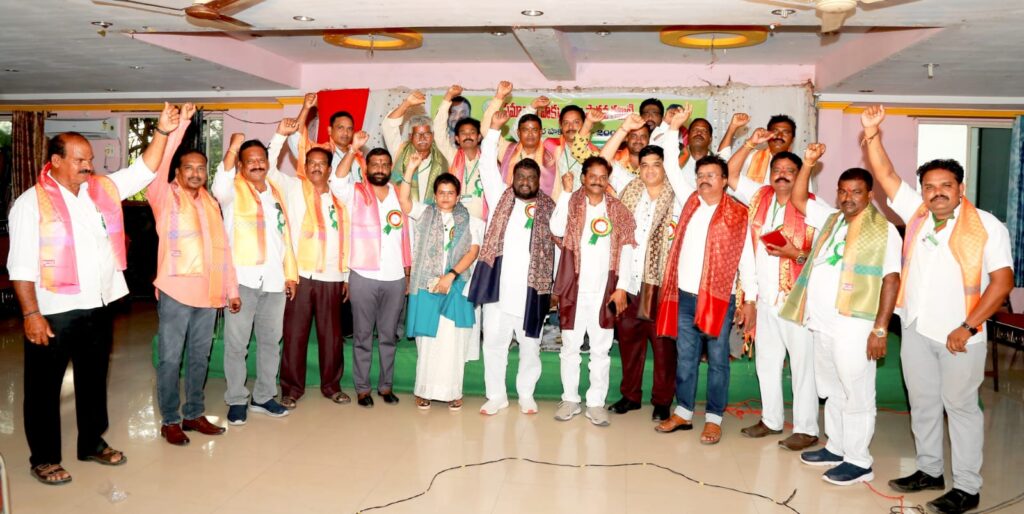
The campaign strategically targets citizens from all walks of life—farmers seeking clarity on subsidy schemes, residents questioning irregular civic works, workers verifying their provident fund status, and students accessing their answer scripts. The message is consistent: “Your question has power. Use RTI to ask it.”
Beyond RTI: Championing the Right to Education
Dr. Mudiraj’s vision for an empowered citizenry extends beyond transparency. His organization is simultaneously applying pressure on state governments for the stringent implementation of the Right to Free and Compulsory Education (RTE) Act, 2009. The committee is actively campaigning for:
* The enforcement of the mandatory 25% reservation for children from economically weaker sections in private schools.
* The complete prohibition of child labor.
* The eradication of physical punishment and mental harassment in all schools across the state.
“This is interconnected,” explains Dr. Mudiraj. “An informed parent, empowered by the RTI, can use it to ensure their child’s right to education is not violated. They can file an RTI to ask about the status of RTE seats in a private school or the utilization of funds in a government school. One right reinforces the other.”
Tangible Change: How the Campaign is Benefitting the Common Man
The true success of the campaign is measured in the stories of everyday citizens who have found their voice.
* In a village in Siddipet district, a group of farmers used the RTI model application guidance provided in a workshop to query delays in the credit of financial assistance for agricultural inputs. The query spurred action, and the funds were released within weeks.
* In Vizag, residents of a colony filed an RTI to access the approved layout plan of their area, uncovering illegal constructions that were subsequently addressed by the municipality.
* Women’s self-help groups are being trained to use RTI to track the disbursement of their loans and subsidies, ensuring they receive every rupee entitled to them.
These micro-stories of victory are creating a macro-impact, building a culture of questioning that is essential for a healthy democracy.
Systemic Advocacy: Pushing for Robust RTI Infrastructure
Recognizing that awareness alone is insufficient without a supportive system, the Samachara Hakku Chattam Sadhana Committee is also engaged in high-level advocacy. The team, including National General Secretary M. Venkatesham, Telangana State President S. Sravanth, and Telangana State General Secretary Dr. Dilip Rao N, has made formal representations to the State Chief Information Commissioners of both Telangana and Andhra Pradesh.
Their primary demand is the urgent appointment of Public Information Officers (PIOs) and Assistant Public Information Officers (APIOs) in all government departments, as mandated by law. The absence of these designated officers often becomes the first hurdle for a citizen trying to apply, leading to frustration and abandonment of the process.
“We are urging the commissions to ensure the architecture of the RTI Act is fully in place. A citizen walking into any department should know exactly whom to approach. We are also pushing for proactive disclosure of information by departments to reduce the need for filing RTIs for basic data,” stated M. Venkatesham.
A Collective March Towards an Informed India
The movement led by Dr. Mudiraj is a testament to the fact that the real strength of a democracy lies in an informed and active citizenry. It is a painstaking, door-to-door revolution that is slowly but surely planting the seeds of accountability.
As the RTI Act approaches its 20th anniversary, the work of the Samachara Hakku Chattam Sadhana Committee serves as both a celebration and a critique—a celebration of the power of the law, and a critique of its unfinished journey to the people. Their campaign is a crucial reminder that the most powerful laws are only as effective as the citizens’ knowledge of how to use them. Through their relentless efforts, they are ensuring that the right to information moves from the statute books into the hands of the people, where it truly belongs.

