Table of Contents

On 26th November 2025, India celebrates Constitution Day, or Samvidhan Divas, commemorating the adoption of its supreme law in 1949. The Preamble, with its promise of justice, liberty, equality, and fraternity, sets the stage for a framework that profoundly impacts the lives of its citizens, particularly in securing the right to education and health.
The Soul of the Constitution: The Preamble
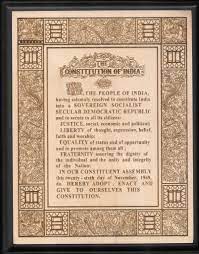
The Preamble to the Indian Constitution begins with the powerful words, “We, the People of India,” establishing that the power to govern derives from the citizens. It declares India a sovereign, socialist, secular, and democratic republic, committed to securing for all its citizens social, economic, and political justice, and assuring the dignity of the individual. This vision of dignity and justice is intrinsically linked to the well-being and empowerment of people, which is impossible without access to education and healthcare.
The Constitutional Journey of the Right to Education
The right to education’s path in Indian law is a remarkable story of evolution. Initially, Article 45 of the Directive Principles of State Policy (DPSP) directed the state to provide free and compulsory education for children within a decade of the Constitution’s commencement. However, its non-justiciable nature limited its enforceability.
The judiciary played a pivotal role in bridging this gap. In the landmark case of Unni Krishnan J.P. v. State of Andhra Pradesh, the Supreme Court held that the right to education flows from the right to life under Article 21, and is a fundamental right for children until they complete the age of 14 years. This judicial interpretation paved the way for a constitutional amendment.

The 86th Constitutional Amendment Act of 2002 was a revolutionary step, which formally inserted Article 21A into the Constitution, making the right to education a fundamental right for all children aged 6-14 years. This was further operationalized through The Right of Children to Free and Compulsory Education (RTE) Act, 2009, which mandated free education, prohibited detention, and ensured 25% reservation for disadvantaged groups in private schools .
Expert Insights: Constitutional Pillars of Empowerment
Leaders from the education and legal sectors highlight how the Constitution’s framework enables their work.

Dr. Dilip Rao N, National Chairman, QEAC: “Article 21A is the cornerstone of educational equity. It legally obligates the state to ensure not just access, but also quality education for every child, forming the bedrock of an enlightened and empowered citizenry.”
Advocate N Narender Kumar, National Legal Advisor: “The Constitution provides the tools for justice. Through Public Interest Litigation, we can approach courts to enforce the state’s duty under Article 21A, making the right to education a living reality for millions.”


Dr. V. Kalyanaraman is the Principal of Kendriya Vidyalaya Perambalur: “The 86th Amendment was a transformative moment. By making education a fundamental right and a concurrent subject, it allows for collaborative policy-making between central and state governments to improve our educational infrastructure holistically.”
Dr. Nitin Mule, Education Consultant:: “The Constitution provides an integrated framework. Just as Article 21A guarantees education, Articles 39(e) and 47 impose a duty on the state to protect the health of workers and citizens, ensuring a life with dignity for all .”


Dr. Sandeep Reddy, Healthcare Professional: “While health is not an explicit fundamental right, the Supreme Court has consistently read it into Article 21 (Right to Life). It is the state’s constitutional duty to provide health facilities and protect public health, as underscored in Article 47 .”
A Living Document for a Healthy, Educated India
76th anniversary of Constitution Day is more than a remembrance; it is a reaffirmation of our commitment to the foundational values of our republic. The journey of the right to education from a directive principle to an enforceable fundamental right exemplifies the Constitution’s dynamic nature. Together with the judicially recognized right to health, it continues to strive towards securing the “dignity of the individual” as promised in the Preamble.